About me

Hi, my name is Ammar I. Borovnica, I am now 16 years old,and counting, and I am a Muslim.On this blog I will post parent guides for books, book reviews, short stories, games, movies and a few miscellaneous articles. Please COMMENT, 1+, recommend this blog to family and friends, and if you have any concerns or suggestions please email me. My email is:"ibibrov@gmail.com"
(Please also note that spoilers are in red in my posts)
THANK YOU!

Popular Posts

Search This Blog

Wednesday, 25 January 2017

My Favourite Quotes (Part 1)

               My Favourite Quotes (Part 1)

(These are SOME of my favourite quotes ever, in no particular order.)

1. "The two most important days of a man's life are the day he gets born and the day he finds out why." Mark Twain

2. "You know that it's there there, but you just don't know where- but just because you can never reach it doesn't mean it's not worth looking for." The Phantom Tollbooth

3. "What's the most resilient parasite? Bacteria? A virus? An intestinal worm? An idea. Resilient...Highly contagious. Once an idea has taken hold of the brain it's almost impossible to eradicate. An idea that is fully formed- fully understood- that sticks; right in there somewhere." Cobb, Inception

4. "Memory can change the shape of a room, it can change the colour of a car. And memories can be distorted. They're just an interpretation, they're not  a record, and they're irrelevant if you have the facts." Leonard Shelby, Memento

5. "Beneath this mask there's more than flesh. Beneath this mask is an idea, Mr.Creedy, and ideas are bulletproof." V for Vendetta

6. "They say we only use a fraction of our brain's true potential. Now that's when we're awake. When we're asleep, we can do almost anything." Cobb, Inception

7. "You either die a hero, or you live long enough to see yourself become the villain." Harvey Dent, The Dark Knight

8. "A man who stands for nothing will fall for anything." Malcolm X

9. "Be peaceful, be courteous, obey the law, respect everyone; but if someone puts his hand on you, send him to the cemetery." Malcolm X

10. "I don't even call it violence when it's in self-defense; I call it intelligence." Malcolm X

11. "A person less fortunate than yourself deserves the best you can give. Because of duty, and honor, and service. You understand those words? You should do your job right, and you should do it well, simply because you can, without looking for notice or reward." Jack Reacher, Nothing to Lose

12. "I don't want to put the world to rights...I just don't like people who put the world to wrongs." Jack Reacher, 61 Hours


Wednesday, 18 January 2017

Top 5 Best Non-Fiction Books of 2016

Top 5 Best Non-Fiction Books 2016

Note before Reading:  The books of the earlier list are not included here, as they're already there. This list is a new and independent list with no real ties to the older one, meaning that these books aren't better than the last ones. These are all books I've read in 2016. A list for 2017 will come probably at the end of the year.This is a countdown from least to best, with a commentary on each.

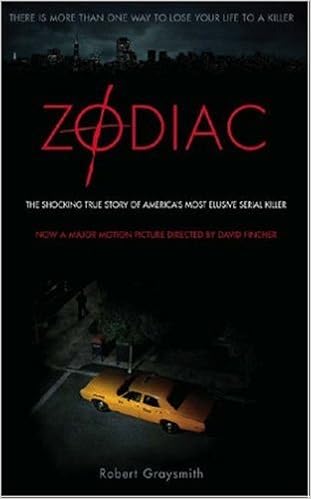
5: Zodiac by Robert Graysmith

Zodiac is a non-fiction book written by Robert Graysmith about the unsolved serial murders committed by the "Zodiac Killer" in San Francisco in the late 1960s and early '70s.
GenreTrue crime
AdaptationsZodiac (2007)
An excellent and in-depth account of the mysterious Zodiac killer, who terrorised San Francisco in the '60s and '70s with his brutal murders and taunting letters to the police, newspapers, and the public. I also watched the movie, which was also excellent, and both are very similar, but the movie left out important details from the book, while concentrating more on Graysmith himself, and on his private life, more than the book. So yes, a very good read.

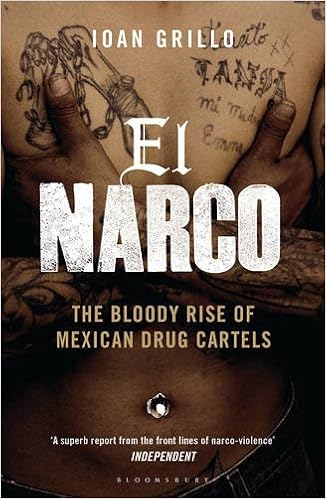
4: El Narco by Ioan Grillo

El Narco: Inside Mexico's Criminal Insurgency is a non-fiction book of the Mexican Drug War written by Ioan Grillo. 
Originally publishedSeptember 2011

Page count336
GenreNon-fiction
PublisherBloomsbury Publishing
A deeply researched analysis of the cartels and their trade, violence, culture, and tons of other things. It is brutal, but still entertaining, and a definite read.

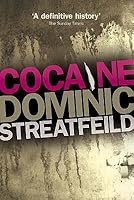
3: Cocaine by Dominic Streatfeild

Cocaine: An Unauthorized Biography is a 2002 non-fiction book about the history of cocaine, written by Dominic Streatfeild and published by Diane Publishing Company. 
This book is about the history of Cocaine itself, starting from its roots at the time of the Spanish  Conquistadors, to its present problems in the world. Well written, with a touch of dry humor every now and then, Cocaine is for everyone who wants to know what cocaine actually is, and some crazy stories along the way.

2: Amexica by Ed Vulliamy

In the last three years more than 38,000 people have been murdered in Amexica - the area of land that forms the border between the US and Mexico. This is both the busiest and most deadly frontier in the world, studded with guard-posts, infra-red searchlights and heavily armed patrols.Across it unfolds a war that is scarcely reported - a war that's being fought, with thousands dying and millions of lives blighted, so that Europe and America can get high.In Amexica, acclaimed journalist Ed Vulliamy explores his own love-hate relationship with the place and its people, while investigating the causes and consequences of the war and its impact on the everyday life which somehow carries on around it.
This book, unlike El Narco doesn't concentrate so much on the trade as on the normal people and their experiences who live around it, and especially on the border. A poetical, beautiful, brutal, and compelling read.

1: The Autobiography of Malcolm X

One of the most, maybe the most impressive, deep, symbolic, deeply felt, and passionately written autobiography I've ever read or ever will read.
Malcolm's character, intelligence and faith is made clearer with every word he says. His amazingly inspiring story, from the deepest and filthiest ghettoes to his Pilgrimage to Mecca, is filled with symbolism and lessons for everyone. But be warned: this book is for marture audiences as it does have inappropriate material. For Further information, go to my parents guide of this truly wonderful true story.


Tuesday, 10 January 2017

"El Narco:The Bloody Rise of Mexican Drug Cartels" by Ioan Grillo (Review)

"El Narco: The Bloody Rise of Mexican                        Drug Cartels" Review


(Before I start, I just want to say that I will post both posts on this blog and videos on Youtube more often now, as I've left the boarding school.)

Basic Info:

In El Narco, Grillo takes a close look at the Mexican drug trade, starting with the term "El Narco", which has come to represent the vast, faceless criminal network of drug traffickers who cast a murderous shadow over Mexico.

Originally publishedSeptember 2011
Page count336
GenreNon-fiction
Goodreads Rating: 4/5 from 2,391 votes.

Review: Excellent but bloody study of Mexicos Cartels is well researched and written.

Drugs.Violence.Cartels.Religion.Culture.Torture.Economy.El Narco deals with all of these,and more. Not only does it deal with all these topics, but it manages to string them all together, to make each one relevant to the others in some way. It can be confusing, with all the different characters and facts, but if you concentrate, it's worth it. Deeply researched, enganging and written from the heart. this book is a definite win, although stomach-twisting in parts, as Grillo relates the relentless and bloody rampage of the cartels, making this book NOT for kids.


El Narco is divided into three parts: History, which relates the rise of Mexicos Criminal Insurgency; Anatomy, which describes and analyses the trade, and Destiny, which looks into the future and suggests different ways with which to gain peace.

But be warned: this book is extremely disturbing in parts, when describing the merciless violence of the Sicarios. 

My rating is 8/10.

Sunday, 23 October 2016

"Uncle Tom's Cabin" by Harriet Beecher Stowe (Review)

           Uncle Tom's Cabin Review

Basic Info:

Originally publishedMarch 20, 1852
GenreNovel

Review:

So I've finally done it: I've read Uncle Tom's Cabin after first having bought it 3 years ago. And my opinion on it is mixed: For its age, it's not too bad, but has several points which I either don't like or don't agree with or whatever; the feministic implications can be felt often, and always make me feel uncomfortable. Then we have the extreme religious implications, which nearly make this a sermon instead of a novel. And as Malcolm X also said, the stereotypes of the stupid, loyal, pacifist Uncle Tom was too much for me: although Stowe was against slavery, she obviously still didn't see Africans as an equal race, and her ignorance of Africa and its people are often visible. Also, this book never describes any of the brutality or death of slavery, which I feel is essential if you want to write a book about it. 

So my overall Rating is 5/10.

Friday, 5 August 2016

"The Phantom Tollbooth" by Norton Juster (Review)

     The Phantom Tollbooth Review

Basic Info:

The Phantom Tollbooth is a children's fantasy adventure novel written by Norton Juster with illustrations by Jules Feiffer, published in 1961 by Random House (USA). It tells the story of a bored young boy named Milo who unexpectedly receives a magic tollbooth one afternoon and, having nothing better to do, drives through it in his toy car, transporting him to the Kingdom of Wisdom, once prosperous but now troubled. There, he acquires two faithful companions and goes on a quest to restore to the kingdom its exiled princesses—named Rhyme and Reason—from the Castle in the Air. In the process, he learns valuable lessons, finding a love of learning.

Review:

The Phantom Tollbooth is undoubtedly the finest children's book I've ever read, although I would recommend it for kids 11 and up, as younger children won't get the puns and the wordplay, and will just wonder what everyone's laughing about. Its positive messages are too numerous to relate, but I'll try later. 

For now, let's just concentrate on why this book is so hilarious. As I said little children will find it hard to understand why it's so funny, but older ones will. The book's hilarity isn't in the usual jokes as found in other books and movies, rather it lies in it's play on words and pure craziness that's so funny. For instance, it transfers idioms and metaphors to reality, for instance jumping to conclusions, having to eat your own words, biting off more than you can chew, and the list goes on forever.

But at the same time, The Phantom Tollbooth doesn't just make you laugh, it also makes you think, as there's tons of symbolism to be found here such as that most people come out of the Sea of Knowledge completely dry, and a few come out completely soaked. The Positive Messages can be best summed up by CommonSenseMedia's review of it:
This book is driven by the view that learning is not only good and fun, but also a moral imperative. In the "Appreciation" foreword added in 1996, Maurice Sendak points out that it was actually compared to the robust Puritan spiritual tract Pilgrim's Progress for its "awakening of the lazy mind." The book begins with main character Milo thinking that life is boring and the pursuit of knowledge is worthless, but by the end, Milo has both the interest and the tools for learning, and a considerably more upbeat outlook.
Being dedicated to advancing the pursuit of knowledge, this book is fairly packed with educational material and clever perspectives on it. Wordplay and math problems are strewn exuberantly, along with commentary on social ills wrought by ignorance and mental laziness. Many of the whimsical characters Milo encounters along the way invite readers to look at long-held assumptions in new ways -- e.g., the airborne Alec Bings, who thinks Milo must be quite old to have his feet touching the ground already.
Yup, that about sums it up!

If I ever get children, I'm going to give them The Phantom Tollbooth and Holes to read as soon as they're old enough (although it is worth saying that Holes is more suited and appropriate for teenagers), as this book answers all the questions frequently asked by young children: Why should I learn this, will I need this in life, this is boring and so on and so forth.

So my OVERALL RATING is for sure 10/10, and an absolute must-read for pretty dang near everyone.


Saturday, 23 July 2016

Top 5 Influental Books of 2015 (Part 2)

        Top 5 Influental Books of 2015 (Part 2)

Note before Reading:  The books of the earlier list are not included here, as they're already there. This list is a new and independent list with no real ties to the older one, meaning that these books aren't better than the last ones. These are all books I've read in 2015. A list for 2016 will come probably at the end of the year.This is a countdown from least to best, with a commentary on each.

5) A People's History of the United States by Howard Zinn 

A People's History of the United States is a 1980 non-fiction book by American historian and political scientist Howard Zinn. In the book, Zinn seeks to present an alternate interpretation of the history of the United States. 
GenresHistory, Non-fiction
This is a meticulously researched and very well written alternate history of the US, showing that it's history is not all glory and banners, but a careless, un-empathetic, and often cruel history, although sometimes you can see the obviously left-wing attitudes and belief of the author, so it should be carefully read.

4) A Long Way Gone by Ishamel Beah 

A Long Way Gone: Memoirs of a Boy Soldier is a memoir written by Ishmael Beah, an author from Sierra Leone. The book is a firsthand account of Beah's time as a child soldier during the civil war in Sierra Leone. 
Originally publishedFebruary 13, 2007
GenreMemoir

A heart-breaking, brutal, compelling and passionately written memoir of a young boy drawn into a bloody and merciless civil war, who lost his family and friends, and with the wish of being part of something strong was drawn into the army, where he started killing people, getting so high on drugs that he stopped sleeping and eating properly, and who then had to live through his nightmare of rehabilitation in a country where nothing was secure or stable. An absolute must-read for anyone who can stomach the bloody, brutal, and sometimes grisly reality of boy soldiers.

3) The Road by Cormac McCarthy

The Road is a 2006 novel by American writer Cormac McCarthy. It is a post-apocalyptic tale of a journey of a father and his young son over a period of several months, across a landscape blasted by an unspecified cataclysm that has destroyed most of civilization and, in the intervening years, almost all life on Earth.

Originally publishedSeptember 26, 2006
GenrePost-Apocalyptic fiction
Page count287
AdaptationsThe Road (2009)
CharactersBurnt ManManThiefWomanBoy

One of the saddest and unique books I've ever read, this masterpiece will hold you on the edge of your seat. Although it is set in such a dark, evil, and dangerous world, it still gives hope, saying that love and belief can still survive through the harshest conditions. Although the gore isn't often here, when it does come, it's stomahc wrenching, especially one scene which I will guarantee you will have trouble reading. But never-the-less, it is still a masterpiece, and is also an absolute must read for anyone who has lost hope in beauty, God, love, the world and about everything else. 

2) The Shock Doctrine by Naomi Klein 

The Shock Doctrine: The Rise of Disaster Capitalism is a 2007 book by the Canadian author and social activist Naomi Klein. In the book, Klein argues that neoliberal free market policies (as advocated by the economist Milton Friedman) have risen to prominence in some developed countries because of a deliberate strategy of "shock therapy". This centers on the exploitation of national crises to push through controversial policies while citizens are too emotionally and physically distracted by disasters or upheavals to mount an effective resistance.

An international best-seller by the author of No-Logo, this book reveals harsh truths about the rich blue-bloods who are sucking blood out of the poorer middle-class, which are so confused or blind that they can't fight back. 

1) Brainwash: The Secret History of Mind Control by Dominic Streatfeild

Brainwash: The Secret History of Mind Control is a 2006 non-fiction book published by Hodder & Stoughton about the evolution of mind control from its origins in the Cold War through to today's War on Terror.

Preceded byCocaine: An Unauthorized Biography
PublisherHodder & Stoughton
NominationsSamuel Johnson Prize

One of the best books on the subject, Streatfeild writes clearly and engagingly, although you should be careful in reading it, as his views are very hard to understand sometimes, demanding multiple reads. It's a clear 18+ with strong depictions of torture, electrocution, rape and so on, which can be painful to read. But still, an absolute must-read. 

Amazon UK links:


Friday, 22 July 2016

"Famous Five Series" by Enid Blyton (Review)

          Famous Five Series Review

Basic Info:

GenresChildren's literature, Mystery, Adventure

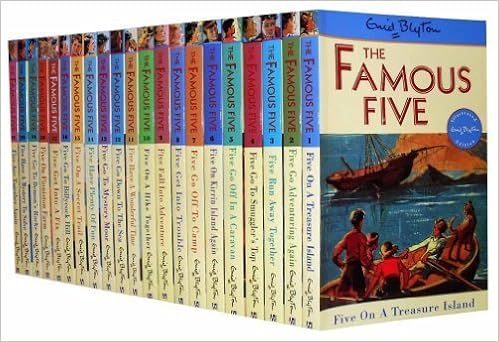
The Famous Five is the name of a series of children's adventure novels written by English author Enid Blyton. The first book, Five on a Treasure Island, was published in 1942. The novels feature the adventures of a group of young children – Julian, Dick, Anne and Georgina (George) – and their dog Timmy. 


Review:

I still can't believe that this Series is so popular: Okay, I get it, this is intended for lil' kids and not teens and adults, but even kids shouldn't read this in my opinion; the unrealistic and flat characters, the numerous plot holes, the too-perfect-ending, the cliche villain/s, the weird messages etc... just shouldn't be read by little children.

Let's start with what I hate about the characters:

1) All of them are flat and pretty much unrealistic, as they're aren't specially trained Black Ops operatives with years of experience, but little kids.

2) George keeps wanting to be a boy although she isn't which, means she's ungrateful for what she has; she's very emotional and unstable, loves an animal more than anything else in the world, has no respect, does what she wants, doesn't follow any rules, and is extremely stubborn.

Now let's continue with the stories themselves: 

1) The overall Super English tone, atmosphere, and speech is often overwhelming: For instance those numerous "Goshes", "Jolly", and so on. I mean, which normal person talks like that? Then the English countryside, English Picnics, the Perfect Stereotype of an English
Scientist, the normally foreign villains and so on.

2) The Crime-Bustin: Which group of kids gets to bust over 20 professional burglars, mafias, crime rings, drug lords, kidnappers, smugglers, forgers, terrorists etc.?! Which criminal is so criminally careless and criminally stupid to let himself be beat by a buncha kids?!

Okay, I admit, maybe I am putting it a bit strongly, but the fact remains that these books are not productive, not intelligent, not very moral, and un-realistic. If you have to read Enid Blyton I suggest either the Mystery Series or The Magic Faraway  Tree Series, which are both better.  


Tuesday, 28 June 2016

"Jurassic Park" by Michael Crichton (Review)

         Jurassic Park Book Review

Basic Info:
Originally publishedNovember 1990
Page count448
GenresTechno-thriller, Horror fiction

Jurassic Park is a 1990 science fiction novel written by Michael Crichton, divided into seven sections (iterations). A cautionary taleabout genetic engineering, it presents the collapse of an amusement park showcasing genetically recreated dinosaurs to illustrate the mathematical concept of chaos theory and its real world implications. A sequel titled The Lost World, also written by Crichton, was published in 1995. (Wikipedia)

Review:

This book received a lot of criticism when published, mostly positive, which I don't really agree with. I mean, the book is a great thriller, but not to be taken seriously. 

I personally think that the whole dinosaur thing has been totally blown out of proportion, and I just think that kids are way too excited about dinosaurs in general: For instance, they're dead, and will never come again, doesn't matter what effort humans will pour into it; what's extinct is extinct. Instead, worry about the very real problem of people dying, not some dead dinosaur.

Then the two children are very annoying and totally cliche characters: the know all, rebellious nerd who's mean to his sister, the little annoying sister with no respect for her elders, and their broken family. Ugh!

The good points are that this is a really good thriller, with nearly no plot holes, which will be hard to put down once you've started it. The mood and the tone of the book are well created, with minor flaws. 

Overall, Jurassic Park is a good book, if not great. My RATING: 6/10